

Will I run Boston 2025?
Running has boomed, or rather sonic-boomed, since COVID. Singles are off dating apps and into running clubs. The former celebrity runners like Will Ferrell have been replaced with a chic crop including Diplo (who famously dropped acid during his first marathon and is now doing a national 5k tour jokingly called "Diplo's Run Club") who are taking the running vogue to new heights in this Zoomer world.
But what does this mean for those who have the dream of running the Boston Marathon? With the application window now closed for Boston 2025 and a record number of Boston applicants, will you actually get in and be running this April? You can enter your information to find out your odds here.
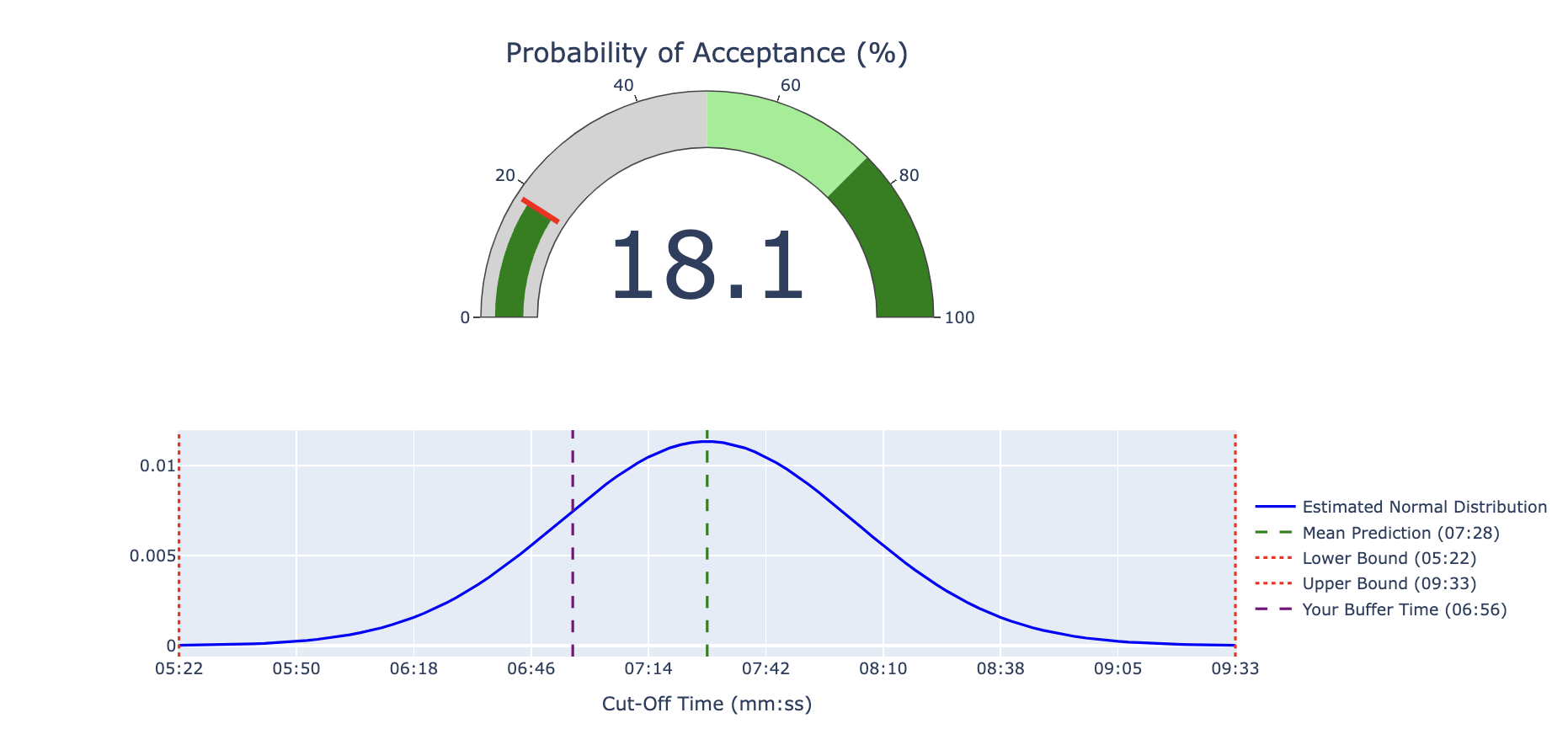
I'm not the first person to try to answer this question. A few folks have already posted their predictions, and to do so they've done some awesome work collecting a lot of data from many Boston qualifying races for the 2025 window. While I find their methods credible, I thought it would be interesting to take my own, simpler approach. This led me to come up with a prediction of 7:38, and a range of 6:19 to 8:57, which is based on the number of applicants the BAA announced yesterday (36k). I'll explain in detail below.
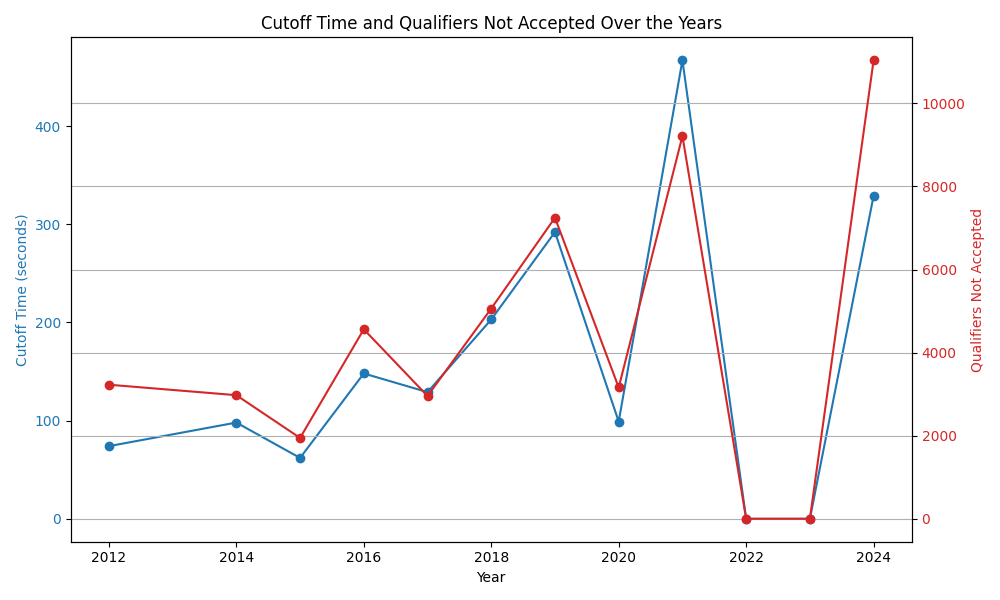
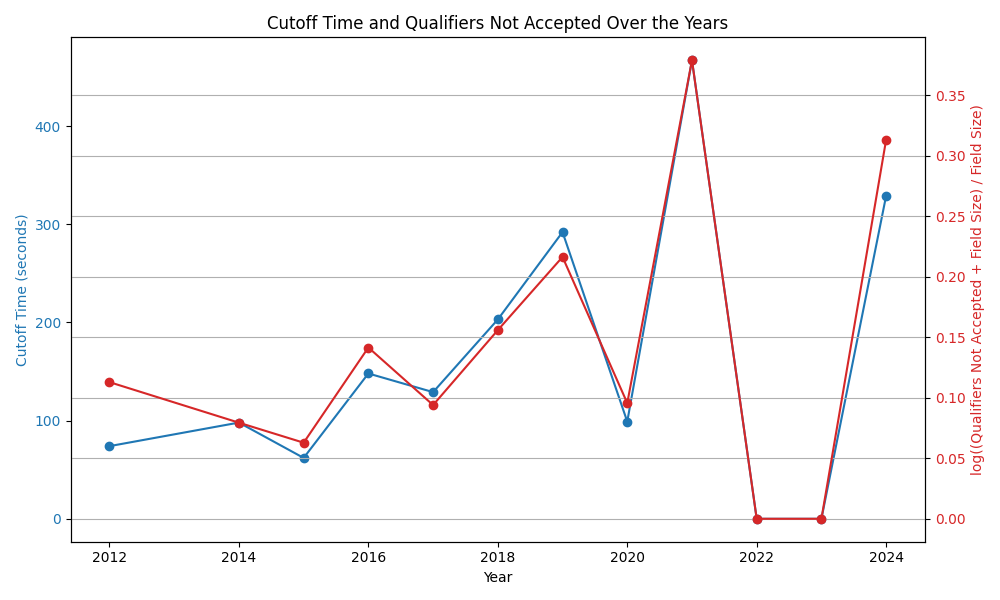
The key insight that allows us to use a simple prediction is that cutoff time is highly correlated (Pearson coefficient of .94) to the number of applicants the BAA rejects, and even more so correlated (.98) to a transformation of that number and the field size (think of the ratio of rejected applicants to the field size as a proxy for competitiveness; see Figures 1 and 2.) This means that if we can estimate the number of athletes the BAA will reject, we can estimate the cutoff time.
Cutoff Determinsm
It's possible to calculate the cutoff time directly if we had perfect information. The cutoff time,
s.t.
where
Field Size =
This parameter
Building a model
Since going through the first-principles approach of calculating the cutoff time seems moot (this is what others have tried), we can go back to simpler means by estimating
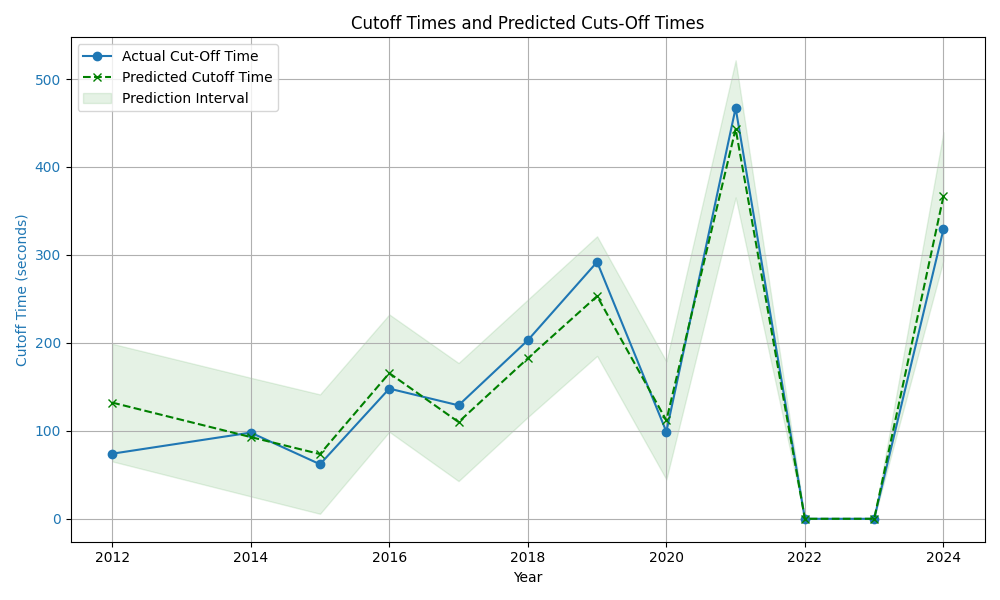
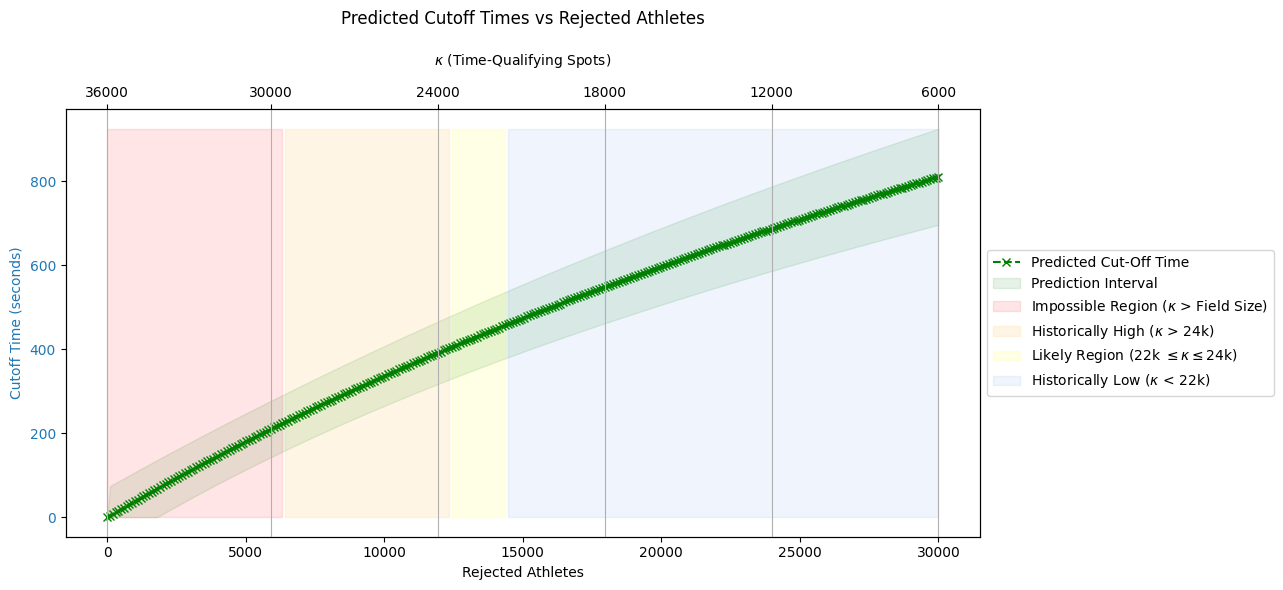
If we build a simple linear model (which seems reasonable given the correlation of .98 we found earlier), we can get something like the Figure 3 below, which at least passes the visual sanity check. This is just a linear model that takes the number of rejected athletes and the field size as inputs.
Some very passionate folks track the number of likely applicants this year (one popular estimate was 34,402), but even better is that the BAA has been announcing this number after registration closes: this year there were 36,406 applicants (
We can probe with the model for varying ranges of
Evaluating our odds
It's likely that the number of qualifying athletes,
At 22k time-qualifying spots, the model predicts a cutoff of 7:38, with a confidence interval of 6:19 to 8:57. If the BAA increases time-qualifying spots to 24k, the model predicts a cutoff of 6:44, with a confidence interval of 5:29 to 8:00.
In the coming weeks, we’ll see how close these estimates are. In the meantime, get off of Reddit, don't hold your breath, and go out for a run!